What is the real
cost of living in Helsinki
Taxes look high. Benefits go further.
See what your salary actually buys and what the city
quietly covers for free.

Build your Helsinki budget
Add your situation and we’ll show your estimated monthly net income
alongside real Helsinki costs, and what the public system covers
What does the cost of living in Helsinki include?

Once your public healthcare fees reach the annual ceiling, most public healthcare is free for the rest of the year. Visits to Helsinki’s health stations are free. Prescription medicines have a separate annual ceiling of €636.12, administered by Kela. Employers are also required to provide occupational healthcare.

Public daycare fees are set by law and scale with household income and family size. From August 2026 the maximum is €335 a month for the first child, and lower-income families pay nothing.

Pre-primary education from age 6 and basic education from age 7 are free, including books and a daily school lunch. Upper secondary education is also free. University is tuition-free for Finnish, EU and EEA citizens.

Parents share 320 working days of paid parental leave, 160 each, and either parent can transfer up to 63 of their days to the other. The birth parent also gets 40 working days of pregnancy allowance. Kela usually pays around 70% of earnings.
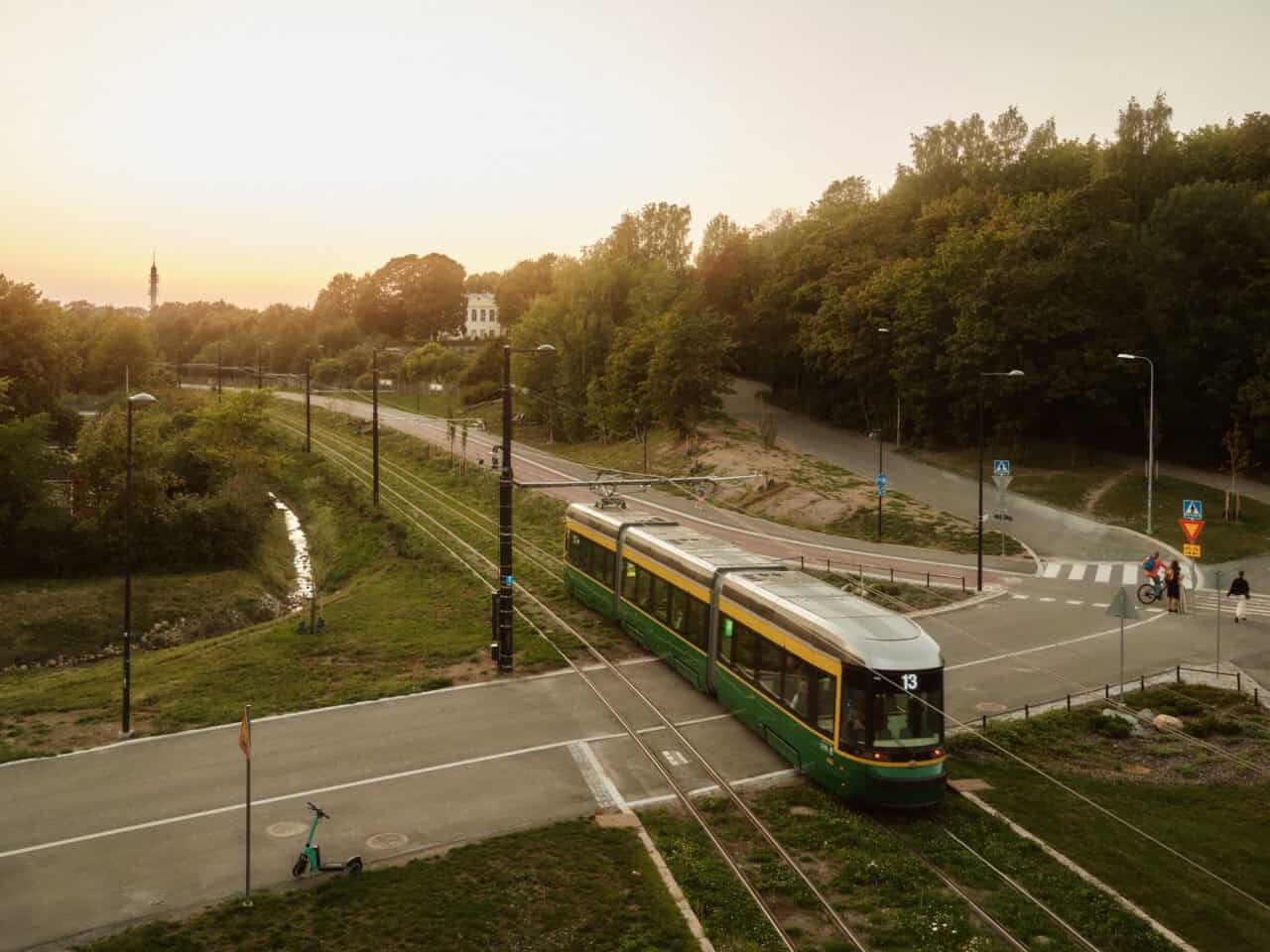
A 30-day HSL AB zone ticket covers metro, trams, buses, commuter trains and the Suomenlinna ferry within Helsinki. Employers can offer a commuter ticket benefit, part of which is tax-free.

Employers pay on average around 17% of your salary into your earnings-related pension (TyEL), on top of your gross pay. Employees pay 7.30%, which the calculator deducts.
This calculator is supported by:
University of Helsinki
University of Helsinki, ranked top 1% globally, unites 30,000+ students and 8,000 staff to drive bold research, learning and global breakthroughs. And the best part, they’re hiring!
 Learn more about the University of Helsinki and apply
Supercell
Supercell is the place to be for those who love games. It’s a place for proactive and independent teams that have the freedom to do what’s best.
 Learn more about Supercell

Helsinki makes it possible for me to grow in my career without sacrificing the joy of everyday family life.
Annie Virtanen
Data sources & methodology
Rent & housing
Statistics Finland: Rents of dwellings
Rent = flat size × average rent per m² for non-subsidised flats. 2- and 3-bedroom flats share Statistics Finland’s three-room-plus rate. “Outer Helsinki” uses zone 3 of Statistics Finland’s four Helsinki zones, so estimates for zone 4 (for example parts of Vuosaari and Malmi) are around 10% high. Espoo and Vantaa use city-wide averages. Flat sizes (30, 45, 70 and 90 m²) are averages for new flats from the City of Helsinki housing report 2024. The ±12% range is a MyHelsinki margin for condition and location. Capital city comparisons: Eurostat, 2025.
pxdata.stat.fi →Updates automatically each quarter.
Tax & take-home pay
Vero.fi: Finnish Tax Administration
Uses the 2026 state tax scale (12.64%–37.5%), Helsinki’s 5.30% municipal tax (City Council, 5 Nov 2025), the basic deduction, the €750 income production deduction and the earned income credit. Employee contributions: TyEL pension 7.30%, unemployment insurance 0.89% and health insurance 1.98%. Employers add around 17% for your pension (ETK). The key employee scheme is a flat 25% tax for salaries of €5,800+ a month, for up to 84 months (60 for returning Finnish citizens). …Excludes the Yle tax (public broadcasting tax, up to €160 a year), church tax and personal deductions. Estimates only – for a more detailed calculation visit vero.fi
vero.fi →2026 rates. Updated October 2026
Daycare
City of Helsinki: Early childhood education fees
Fees are set by law (Act on Early Childhood Education Fees) and depend on household income and size. From 1 August 2026: maximum €335 a month for the first child, minimum billed fee €32, free for lower-income families. 5-year-olds get four free hours a day; pre-primary from age 6 is free.
hel.fi →Fees from 1 August 2026.
Healthcare & parental leave
Kela: Social Insurance Institution of Finland
Public healthcare has an annual payment ceiling of €815, after which most care is free. Helsinki health station visits are free (City of Helsinki). Medicines have a separate €636.12 ceiling. Employers must provide occupational healthcare. Parental leave: 320 working days per family, 160 per parent, up to 63 transferable, plus 40 days of pregnancy allowance. Kela usually pays around 70% of earnings.
kela.fi →2026 figures. Revised annually.
Education
Finnish National Agency for Education
Pre-primary (age 6), basic (age 7) and upper secondary education are free, including books and school lunch. University is tuition-free for Finnish, EU and EEA citizens. Most others pay tuition fees for English-taught programmes
oph.fi →Checked October 2026.
Groceries
University of Helsinki: Reference budgets
Based on the University of Helsinki’s 2026 reference budgets (2025 prices): about €312 a month for one adult and €567 for a couple, plus an average of €175 for each child. Actual costs range from about €120 for young children to around €220 for teenagers. The figures include a weekly workplace lunch and an occasional meal out.
helsinki.fi →Published April 2026. Reviewed annually
Transport
HSL: Helsinki Region Transport
With a continuous subscription in the HSL app, a 30-day AB zone ticket costs €61.60. Bought one month at a time, it costs €73.90. It covers metro, trams, buses, commuter trains and the Suomenlinna ferry within Helsinki. Employers can offer a commuter ticket benefit, part of which is tax-free.
hsl.fi →Checked October 2026.
Phone, gym & eating out
Provider prices and Numbeo
Helsinki Partners estimates based on providers’ own published prices, not official statistics. Gym: €45 a month is a typical mid-range membership. Budget chains (Fitness24Seven, Liikku, EasyFit) start at €33–37, Fressi at €40–60 and full-service Elixia at €55–84, excluding joining fees and offers. Mobile and internet: €45 a month covers an unlimited-data phone plan (€26–37 at operators’ list prices) and home broadband (€15–30). Many households use mobile data only, which brings the total to €25–40. Eating out: restaurant prices from Numbeo, a crowdsourced database. Employers can offer a tax-free sports and culture benefit, rising from €400 to €540 a year for 2026; each employer decides the amount.
numbeo.com →Accessed October 2026.
Salaries
Statistics Finland: Earnings by occupation
Based on Statistics Finland’s median earnings by occupation, TEK (Finnish Technology Professionals) surveys and Koodiklinikka’s developer survey. The surveys aren’t official statistics, and Statistics Finland’s figures are national, not Helsinki-only. Use as a starting point only.
stat.fi →2024 figures.
Common questions about the cost of living in Helsinki
Is Helsinki expensive to live in?
It depends on your salary, household and where you live. For example, a single person earning €4,000 a month before tax takes home about €3,000 a month in Helsinki in 2026, according to the Finnish Tax Administration’s tax rate calculator. A 30 m² studio in the city centre averages around €870 a month (Statistics Finland), food for one adult around [€310] (University of Helsinki reference budgets) and a monthly travel pass €61.60 (HSL). That leaves roughly €1,750 a month for everything else.
Public healthcare fees have an annual ceiling, daycare fees depend on income, and basic education is free. A salary comparison on its own doesn’t show any of this, so use the calculator above to see the figures for your own situation.
How much is take-home pay on a €4,000 salary in Helsinki?
On €4,000 a month (€48,000 a year), take-home pay in Helsinki is about €3,000 a month in 2026, or around 75% of gross pay. That’s after state income tax, Helsinki’s 5.30% municipal tax and the Yle public broadcasting tax. It’s also after employee contributions for pension (7.30%), unemployment insurance (0.89%) and health insurance.
This assumes your salary is your only income and you aren’t a church member; church tax would reduce your take-home pay slightly. Your own tax rate depends on your personal deductions, so check your figure with the Finnish Tax Administration’s tax rate calculator.
Do salaries in Finland include a holiday bonus?
Many do, but not all. Many employees receive a holiday bonus (lomaraha) on top of their normal pay, usually 50% of the holiday pay for the leave they have earned. It isn’t required by law: it comes from collective agreements, so not every job includes it (Suomi.fi). Some agreements calculate it differently. Central government staff, for example, get a percentage of monthly pay for each month of holiday earned (Ministry of Finance).
Over a full year, the bonus typically adds around half a month’s salary or a little more to annual gross pay. The calculator doesn’t include it, so check your contract or the collective agreement for your sector.
What is the key employee tax scheme?
Foreign experts moving to Finland can pay a flat 25% tax on their salary for up to 84 months if they earn at least €5,800 a month and haven’t lived in Finland in the previous five years. Finnish citizens returning from abroad can use the scheme for up to 60 months. You apply to the Finnish Tax Administration, which decides eligibility (Vero.fi: key employees). Turn on the key employee option in the calculator to see the effect.
How much does rent cost in Helsinki?
Rent depends mostly on the area and the size of the flat. In central Helsinki, non-subsidised rents for studios average around €29 per m² a month, so a 30 m² studio costs about €870 a month, while larger flats cost less per square metre (Statistics Finland). These averages cover all current tenancies, not only new leases, so rents on new listings are often higher (Statistics Finland: rents of dwellings).
Non-subsidised rents in Greater Helsinki fell by 0.5% in 2025 (Statistics Finland). Use the housing step in the calculator for an estimate based on your preferred area and flat size.
Is it cheaper to live in Espoo or Vantaa than in Helsinki?
On average, yes, per square metre. Studio rents average about €23.70 per m² in Espoo and €23.10 in Vantaa, compared with about €28.90 in central Helsinki (Statistics Finland). Check which HSL zone you’d be commuting from, because travel costs can be higher (HSL).
Is healthcare free in Helsinki?
Public healthcare isn’t free, but there is an annual limit on what you pay. In 2026, once your public healthcare fees reach €815 in a calendar year, most public healthcare is free for the rest of that year. You track this yourself, so keep your receipts (City of Helsinki: payment ceiling).
Appointments at Helsinki health stations are free, although there is a €60.60 fee if you miss an appointment or cancel too late (City of Helsinki: health service fees). Prescription medicines have a separate annual ceiling of €636.12 ([Kela]([Kela link])). Employers must arrange preventive occupational healthcare for their staff, and many also cover GP-level care, although that part is voluntary (Kela: occupational health care).
How much does childcare cost in Helsinki?
Public daycare fees are set by law and depend on household income and size. From 1 August 2026, full-time care for the youngest child costs between €32 and €335 a month, and families below the income limit pay nothing. A second child costs at most 40% of that fee (up to €134), and each further child 20% (Finnish Government; City of Helsinki fee bulletin).
Five-year-olds get four hours of early childhood education a day free. Pre-primary education for six-year-olds is also free for four hours a day, and any extra daycare hours are charged (City of Helsinki: early childhood education fees).
Is university free in Finland for international students?
University is tuition-free for Finnish, EU and EEA citizens. Most other students pay tuition fees for bachelor’s and master’s programmes, and universities offer scholarships. Non-EU citizens who hold certain Finnish residence permits are also exempt, including permanent residence permits and the EU Blue Card (Aalto University;).
Pre-primary, basic and upper secondary education are free for everyone, including books and a daily school lunch (Finnish National Agency for Education).
How much does public transport cost in Helsinki?
A 30-day HSL ticket for zones A and B costs €61.60 with a continuous subscription in the HSL app, or €73.90 if you buy one month at a time. It covers the metro, trams, buses, commuter trains and the Suomenlinna ferry within Helsinki (HSL). Employers can offer a commuter ticket benefit, part of which is tax-free.
How much do groceries cost in Helsinki?
A single adult’s food budget is around [€310] a month, based on the University of Helsinki’s reasonable-minimum reference budget for 2025. Couples and families need more, and the calculator adjusts groceries for your household type.
What benefits do employers in Finland usually offer?
By law, employers pay into your earnings-related pension on top of your gross pay: on average 17.1% of your salary in 2026 (Ministry of Social Affairs and Health). They must also arrange preventive occupational healthcare, and they can choose to cover GP-level care as well (Kela).
Employers can also offer other benefits with favourable tax treatment. A commuter ticket benefit is tax-free up to €3,400 a year (Finnish Tax Administration), and a sports and culture benefit is tax-free up to €540 a year from 2026 (Finnish Tax Administration). A lunch benefit is taxed at a reduced value (Finnish Tax Administration). Each employer decides which benefits to offer and how much they’re worth.
What costs aren’t included in the calculator?
The calculator covers regular monthly costs, so a few one-off and variable costs aren’t included. Landlords can ask for a rental deposit of up to three months’ rent, which is the legal maximum (Act on Residential Leases 481/1995, section 8). Some landlords also require home insurance, and electricity, and sometimes water, are often billed separately from rent. Church tax applies only if you’re a member, and moving costs such as furniture and winter clothing are also extra.
How accurate is this calculator?
The calculator gives estimates, not tax or financial advice. Rents update each quarter from Statistics Finland, and tax figures use 2026 rates from the Finnish Tax Administration. Daycare fees follow the rates in force since 1 August 2026, and healthcare and transport figures were last checked in October 2026. For your exact tax, use the Finnish Tax Administration’s tax rate calculator.