Aalto’s Helsinki – 7 stops off the beaten path
You may think you know Aalto’s Helsinki. The landmarks, modernity, nature, warmth and humanity. This walk goes somewhere else: a bomb shelter entrance with bigger plans beneath it, a building demolished for a marble cube, and the quiet grave of Alvar, Aino and Elissa Aalto – the architects who shaped the city. Seven stops, on foot.
Walking in Aalto’s shoes
Lace up your most comfortable pair, this stroll takes in seven of Helsinki’s lesser-known Aalto sites. Most buildings are viewable from the outside only.
But fear not – the Aalto Foundation also offers guided group city tours with access to some of the interiors listed here.

Stop 1 – Enso-Gutzeit Headquarters
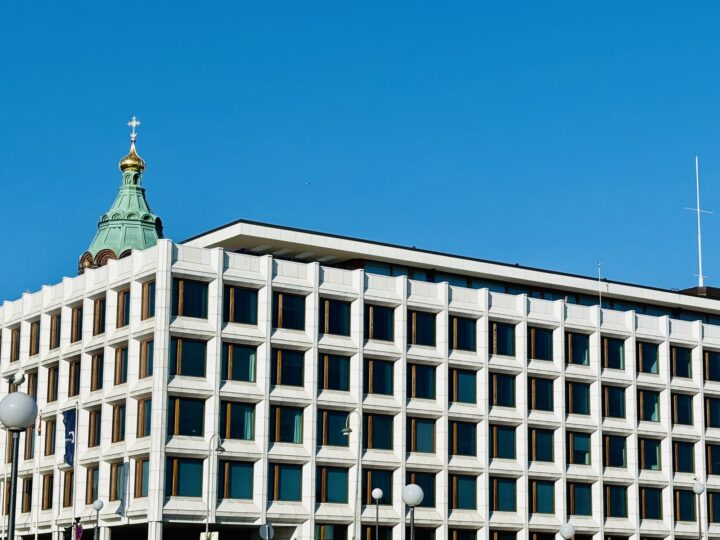
Few Helsinki buildings divide opinion quite like the Enso-Gutzeit Headquarters. The controversy started before it was even built. A beloved 19th-century building by Theodor Höijer was knocked down to make way for the white Carrara marble facade. Locals were furious. Some still are.
Whatever you think, the Aalto office, characteristically, designed it as a complete work. Stand at the harbour. You might find yourself relenting to its quiet confidence. Whether that justifies what went down is still, in Helsinki, a stone in many a shoe.
Behind the facade: Locals nicknamed it the Sugar Cube. It was granted protected status in 2010. Argument settled. Well, officially.

Stop 2 – Fabianinkatu Office Building
Not every Aalto building announces itself. This office building on Fabiankatu doesn’t even try.
A commercial and office building from the early 1960s, it sits tucked between Aleksanterinkatu and The Esplanade with views towards the park. Worth a stop for exactly that reason. Not all Aalto is monumental. Some of it is just quietly, stubbornly good. It also houses the Paradox Museum these days. 40 rooms of optical illusions and perception tricks. Somehow fitting.
Behind the facade: The building was designed as an extension to the Nordic Union Bank. The bank eventually moved on. The building didn’t.
Stop 3 – Restaurant Savoy
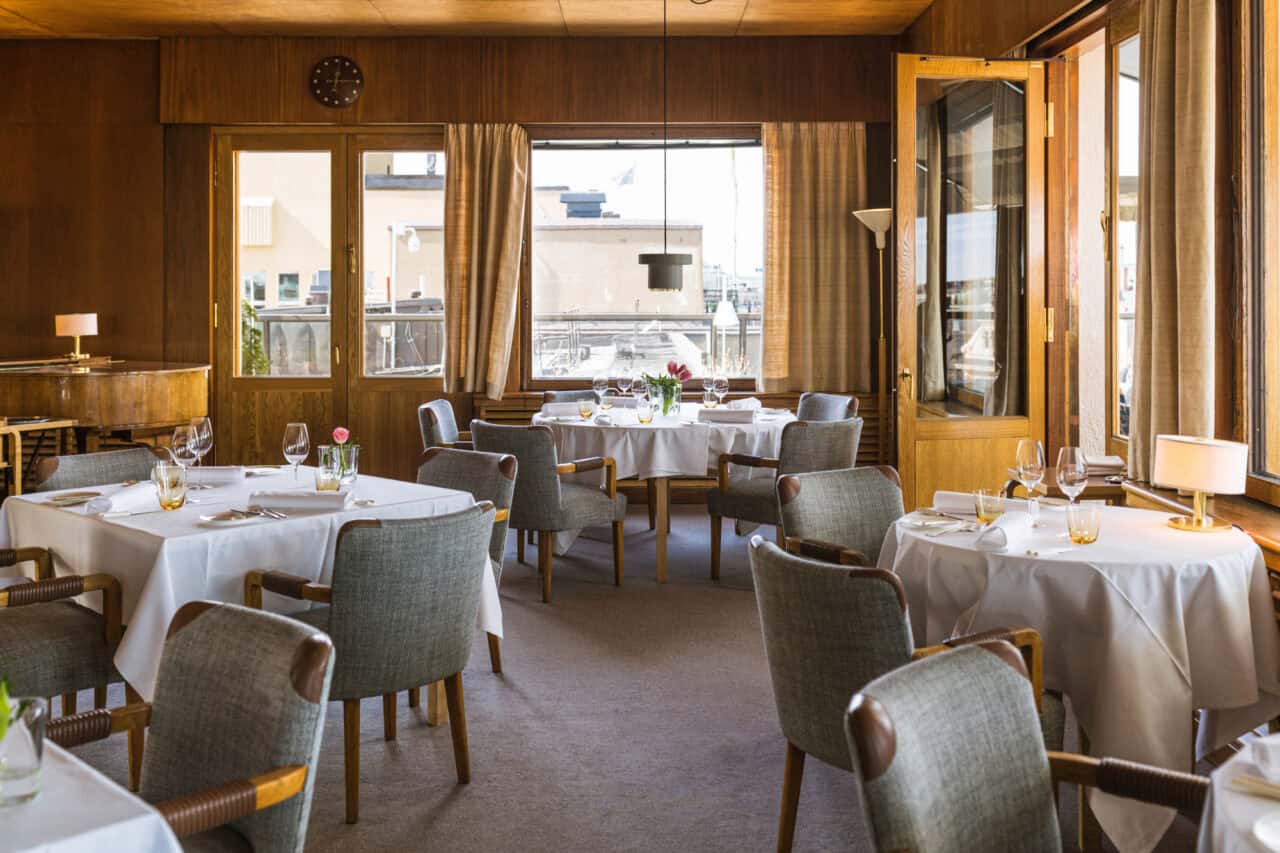
Restaurant Savoy has long been among Helsinki’s top restaurants. Since 1937. One of the few Aalto interiors you can actually sit down in. Field Marshal Mannerheim did – on many an occasion.
Alvar and his first wife, Aino Aalto, together shaped everything as a complete interior, from the furniture and fittings to the function rooms. The restaurant is on the top floor. The Esplanade below. Terraces on three sides. Much of the original atmosphere has survived, a rarity for a working restaurant of this age.
Behind the facade: In 1936, Aalto entered a glass design competition with what was called “Eskimoerindens skinnbuxa” (The Eskimo Woman’s Leather Breeches). He won. The Savoy Vase took its name from the restaurant, where it has been located since 1937.
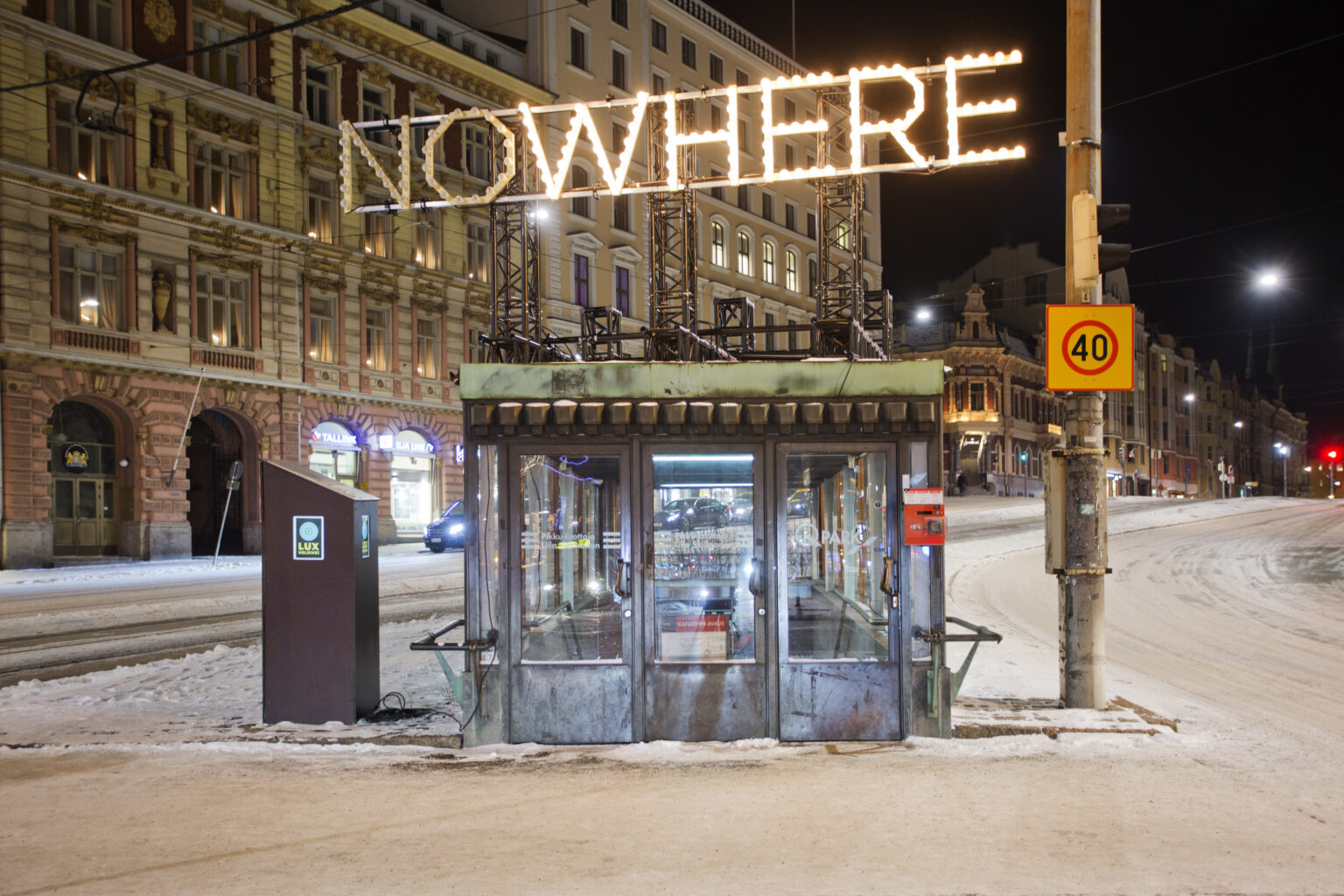
Stop 4 – Erottaja Pavilion
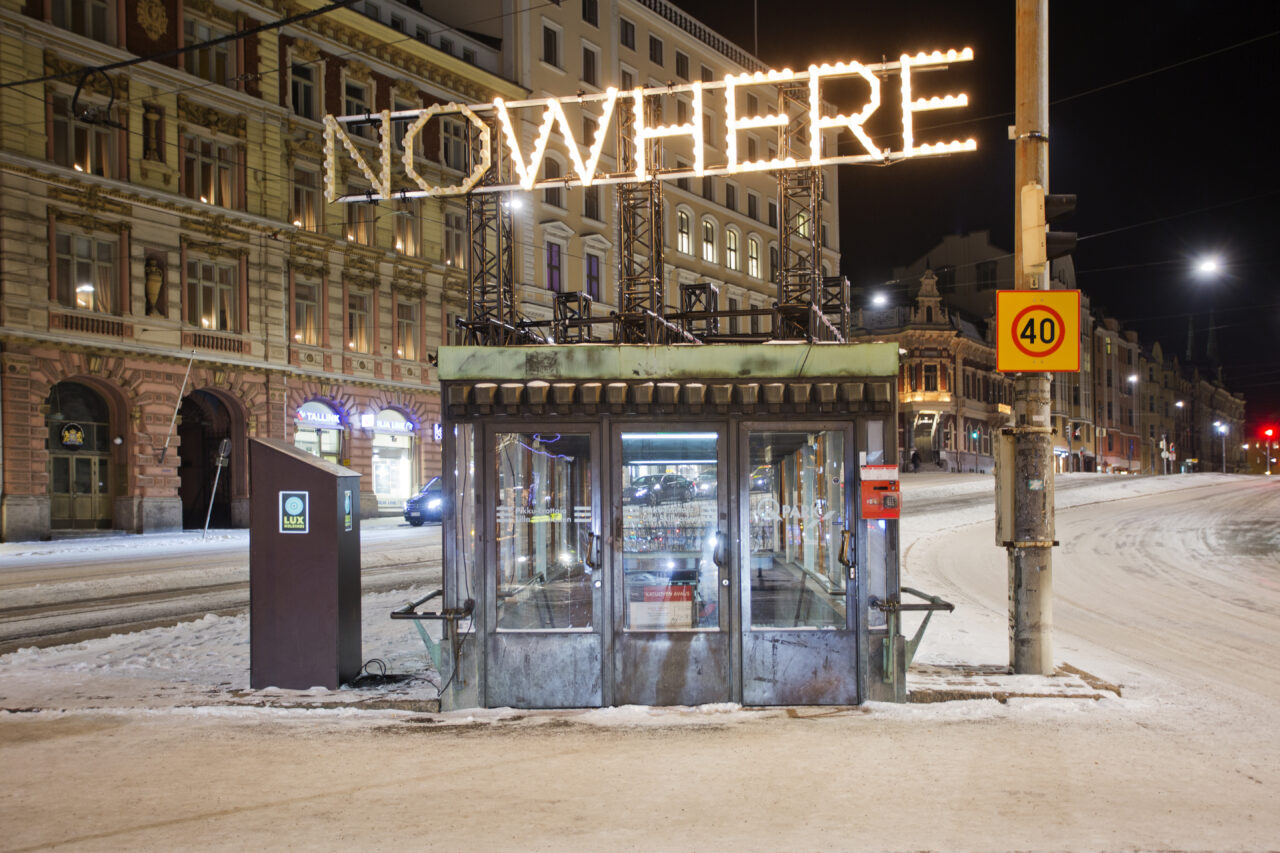
Easy to walk past. Rather the point. Small, bronze and granite-clad, the Erottaja Pavilion sits close to the Academic Bookstore and could pass as an entrance to an underground car park. Because it is. What it was meant to be is a different story.
In 1941, Aalto’s office won a competition to redesign the entire Erottaja district, including an underground bomb shelter. The pavilion, completed a decade later in 1951, is the only part that was ever built. The elegant staircase inside is worth a look.
Behind the facade: This was Aalto’s first public building in Helsinki. Most of the plan exists only on paper.
Stop 5 – The Engineers’ House
The red brick and ribbon windows of the Engineers’ House stand out sharply against its Art Nouveau neighbours in Punavuori. Built in 1950–51 for the Finnish engineers’ association of its day, this building has had more lives than most.
The Aalto office worked from rooms here before the Munkkiniemi studio was completed in 1955. The building later housed a theatre, cinema and television studios. In 1967, the Jimi Hendrix Experience recorded a TV playback appearance here.
By 2022, the former office floors had been converted into 18 high-end apartments. All snapped up in two hours The basement has a rentable sauna and event space. All this feels, somehow, very Helsinki.
Behind the facade: After Hendrix’s TV appearance here, he played a gig at the Hall of Culture that very same evening. Two Aalto buildings. One day.
Stop 6 – Helsinki Energy Office Building
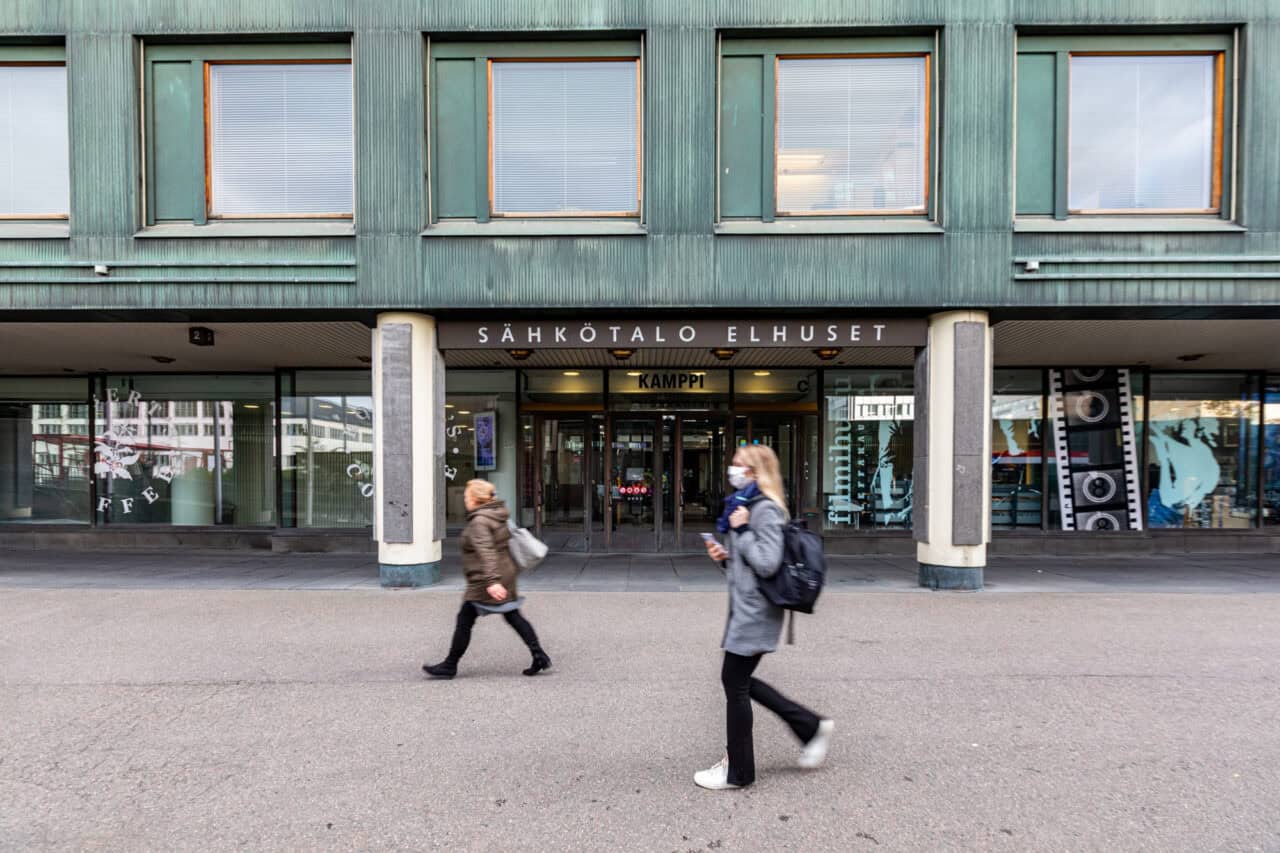
When the Helsinki Energy Office Building was finished in 1973, the neighbouring shopping Kamppi Helsinki was still decades away. Designed as a total work, Aalto’s office handled everything from the corrugated copper facades to the glazed blue and white ceramic wall tiles inside.
It no longer does what it says on the tin, however. Helen, the Helsinki energy company it was built for, moved out in 2025. The building still houses the Aalto Auditorium, a 90-seat event space with its own entrance on Runeberginkatu.
Behind the facade: Together with Finlandia Hall, this is one of only two buildings ever realised from Aalto’s ambitious 1961 city-centre plan. The rest exists only on paper – much like the Erottaja Pavilion earlier on this walk.
Stop 7 – Hietaniemi Cemetery
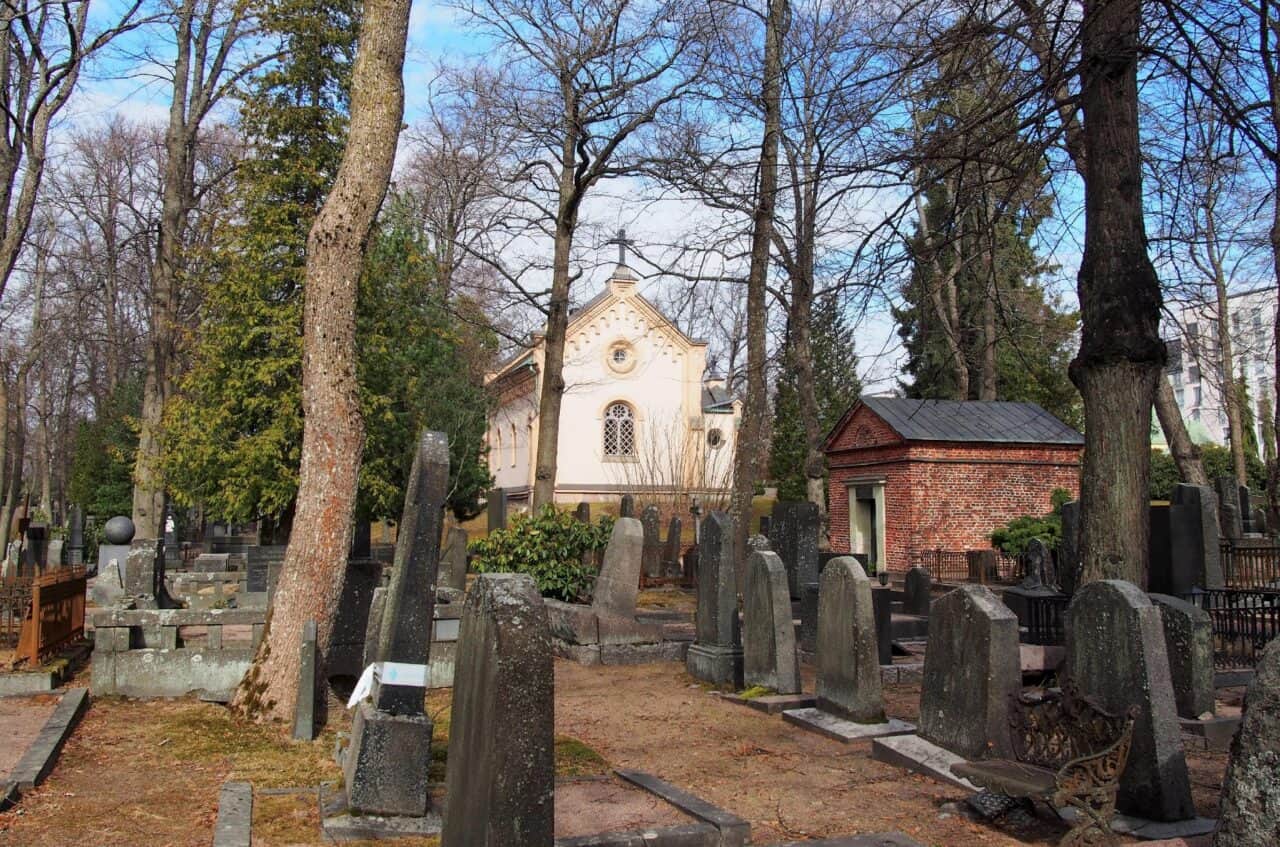
Hietaniemi Cemetery is Helsinki’s most historic cemetery, and the resting place for many notable Finns. Alvar and his wives and collaborators Aino and Elissa Aalto are all buried here. Together. Aino died in 1949, Alvar in 1976, Elissa in 1994. An understated grave for the trio at the centre of Finnish architecture and design for half a century. For Aalto pilgrims, a quiet essential.
Behind the facade: Aino Aalto died before seeing many of the buildings her work helped shape. After Alvar’s death, Elissa ran the studio, completed unfinished projects, became chairperson of Artek, and guarded the Aalto legacy. Both women’s names appear on far fewer buildings than they should.
See the places on the map
All about Alvar Aalto and Helsinki
If you want civic, monumental Aalto, Helsinki has it. If you want the intimate and domestic, Helsinki has that too. If you want interiors and objects, design you can sit in, eat at, and take home, Helsinki has all of it. Whatever draws you to Aalto, this is where his story is most fully told.